
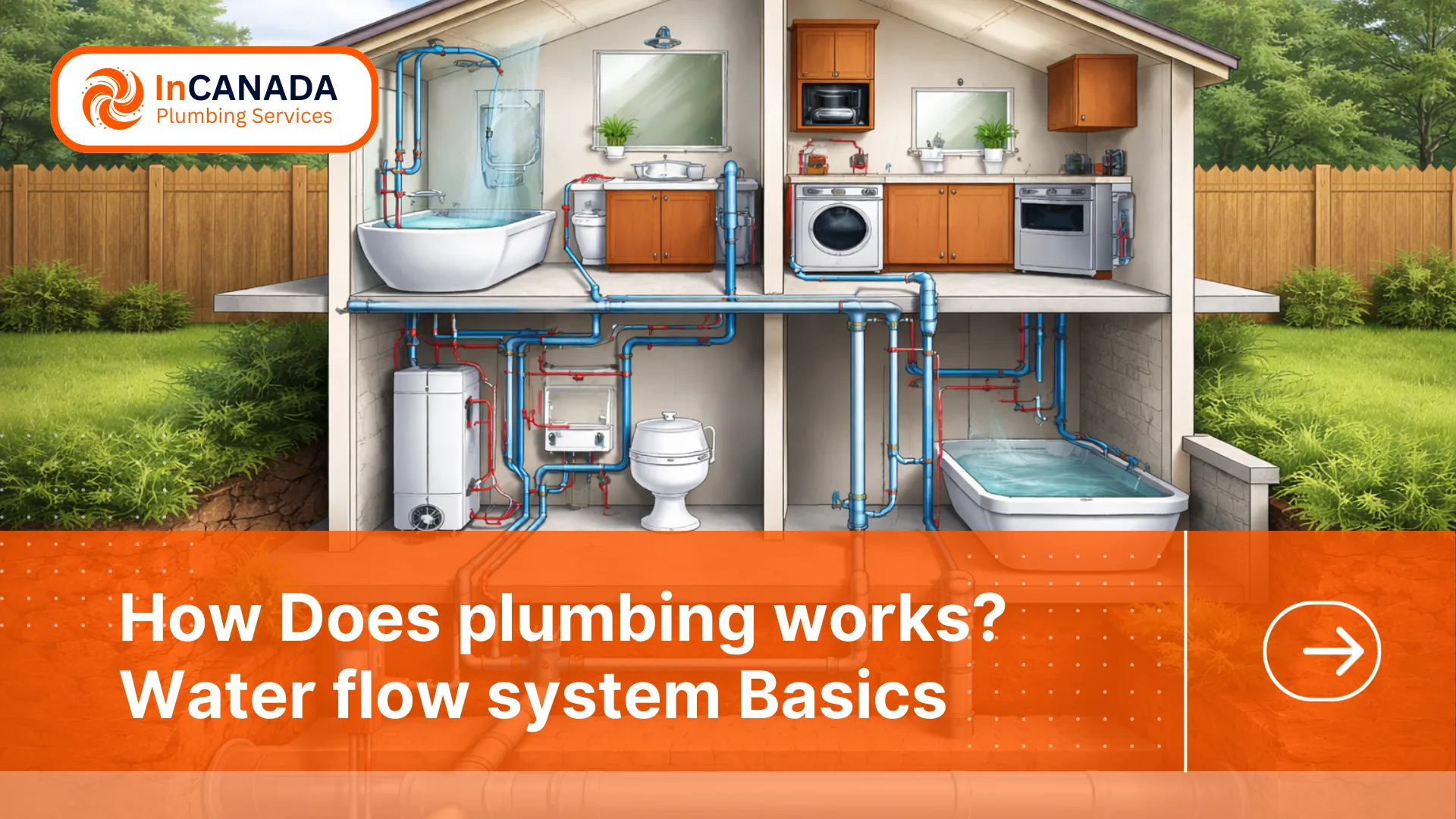
Plumbing works by moving potable water under pressure to fixtures, then carrying wastewater away through gravity drains with vented piping. A plumbing system has 3 linked parts: water supply, drain waste vent, and fixture controls. In Canada, installation rules and safety limits are set in documents such as the National Plumbing Code of Canada 2020 by the National Research Council of Canada.
What is Plumbing work?
Plumbing work is the installation, repair, replacement, and testing of water supply lines, drains, vents, valves, and fixtures. Plumbing work includes rough in pipe layout, final fixture set, shut off setup, and system checks for water pressure, flow rate, and drainage performance. Plumbing work includes cross connection control, since potable water safety depends on backflow prevention.
How Does plumbing works?
Plumbing works through 2 flows that share the same building space but use different pipe paths. Water supply uses pressure from a municipal main or private pump to push water through distribution piping to fixtures. Drain waste vent uses gravity to move used water from fixtures to a building drain, while vents move air to keep drain pressure stable.
How does plumbing work in houses?
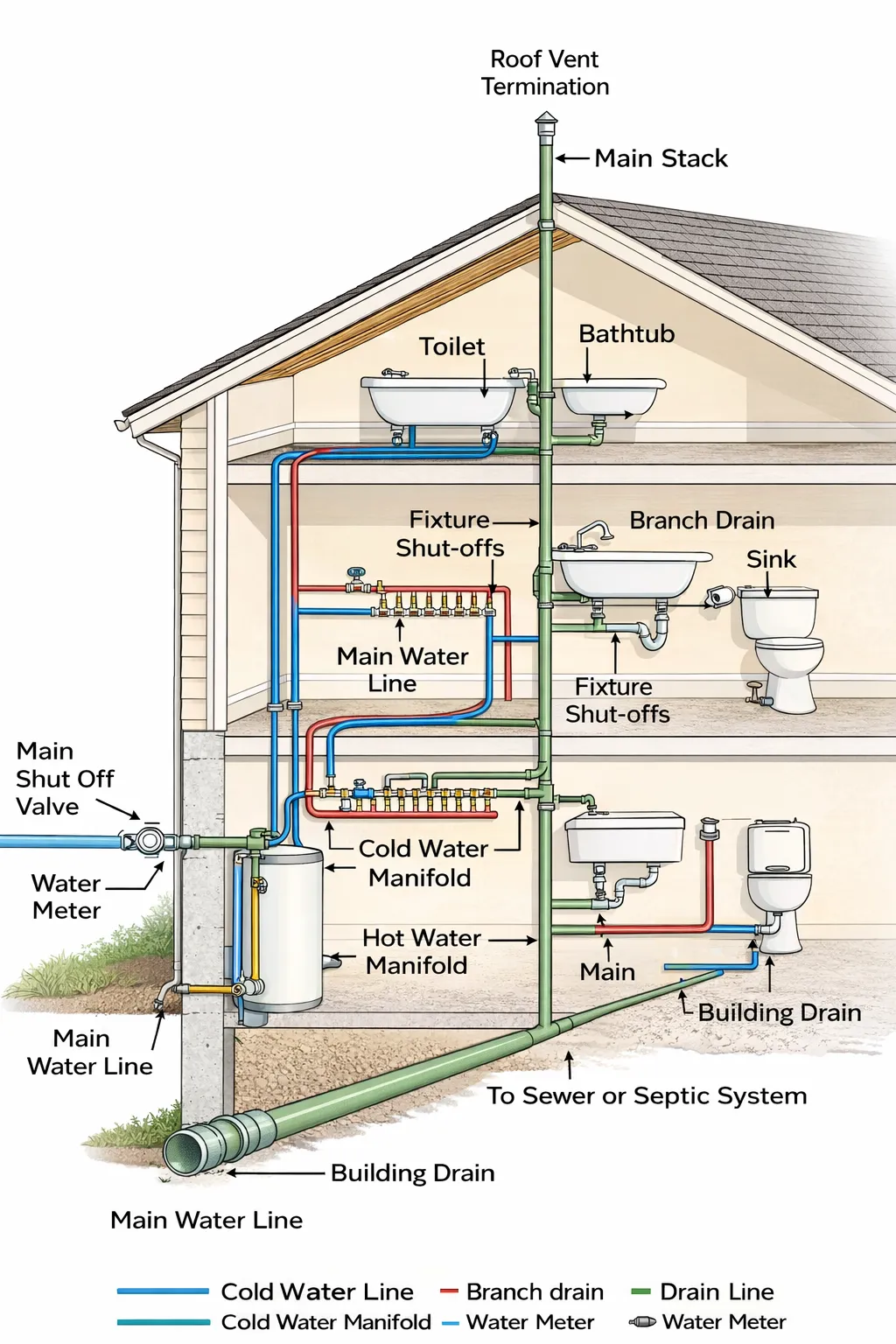
House plumbing works with a single water service entry, a main shut off, a cold water manifold or branch layout, and a hot water source. Fixture shut offs isolate sinks, toilets, tubs, and laundry points. Drain lines run from each fixture trap to a main stack, then to a building drain that exits to a sewer or septic system. A roof vent termination keeps drain airflow open so traps keep a water seal.
How water flow system is pass though plumbing lines in homes?
Home water flow passes through supply piping as clean water, then returns through drain piping as “waterwaste flow”. The two paths stay separate until wastewater exits the building.
Send water from the service line to the main shut off and meter area.
Split water into cold branches and hot branches after the water heater.
Deliver water to fixtures through smaller fixture feeds and stop valves.
Return water from fixtures into traps, then into branch drains and the main stack.
Move wastewater by gravity through the building drain to the building sewer or septic inlet.
How does plumbing work in Buildings?
Building plumbing works by dividing water pressure and drainage capacity across floors and occupancy zones. Water supply often uses vertical risers, pressure reducing valves, booster pumps, and hot water recirculation loops to keep delivery stable at distant fixtures. Drain systems use stacks, branch drains, cleanouts, and vent networks sized for higher fixture unit demand. Below grade fixtures may discharge through a sump or ejector system to reach the building drain elevation.
How water flow system is pass though plumbing lines in buildings?
Building water flow moves from a service entrance to floor zones, while drainage returns through stacks to a single building drain exit point.
Measure water at the service entrance with a meter and a main shut off.
Distribute water up risers, then across floors with zone valves and pressure control.
Stabilize hot water with a recirculation loop, if the pipe run is long.
Collect wastewater from fixture traps into branch drains, then into soil or waste stacks.
Vent stacks through the roof to keep drain air pressure balanced.
Discharge flow from the building drain to sewer, septic, or a site connection point.
How draning plumbing works?
Draining plumbing works by using gravity, trap water seals, and vent air paths to move wastewater without letting sewer gases enter living spaces. In many Canadian houses, draining design accounts for cold season risk through protected routing and below grade pipe placement that limits freeze exposure. In general buildings, drainage reliability comes from stack sizing, cleanout spacing, and access for camera inspection and mechanical clearing when buildup slows flow.
How do you maintain you plumbing systems?
Plumbing maintenance keeps flow stable, limits water loss, and prevents drain backups. Use a short routine with fixed checks.
Test valves by closing and opening the main shut off and fixture stops.
Check joints for moisture marks at supply connections and trap nuts.
Clean screens by rinsing faucet aerators and shower heads.
Flush tanks by draining a few litres from the water heater, if sediment shows.
Clear drains by removing hair and debris from strainers before buildup hardens.
Verify pumps by cycling a sump pump float switch and checking the discharge line.
Schedule service for backflow devices, if a tester tag or site plan lists one.
Comments (0)
Comments are disabled.